Bedrooms in Indian homes have changed more in design terms over the past ten years than almost any other room in the house. The shift has been away from the heavy wood furniture and ornate detailing that characterized bedroom interiors of an earlier generation and toward spaces that feel lighter, quieter, and more personal. The current direction values surface quality over decoration, material restraint over variety, and a sense of calm over the kind of richness that used to signal good taste in a bedroom.
This shift is partly a response to how urban apartments are built now, where ceiling heights are lower, room dimensions are more compact, and natural light is less predictable than in older, more generously proportioned homes. Design choices that create a sense of spaciousness, whether through lighter color palettes, mirrors used with intention, or material finishes that read as warm without being visually heavy, have become more relevant in this context.
Color and Material Directions That Are Working Right Now
The palette direction that comes up most consistently in contemporary Indian bedroom interiors is warm neutrals combined with one deeper accent tone. Warm whites, sandy beiges, and dusty taupes on the main surfaces, with a terracotta, deep sage, or warm charcoal on a feature element, produce a result that feels current without following any single trend too closely. The accent color is typically introduced through a single wall, the wardrobe finish, or an upholstered headboard rather than distributed throughout the room.
Textured surfaces have moved firmly into the bedroom in recent years, and this is one of the directions that produces the most visible difference between a room that has been designed and one that has simply been furnished. A feature wall in a fluted or louvers finish behind the bed, even in a neutral tone that does not introduce additional color, adds depth and visual interest that a painted wall in the same color cannot. The shadow play across the ridges of a louver panel surface changes through the day as the light moves, which gives the room a quality that feels alive rather than static.
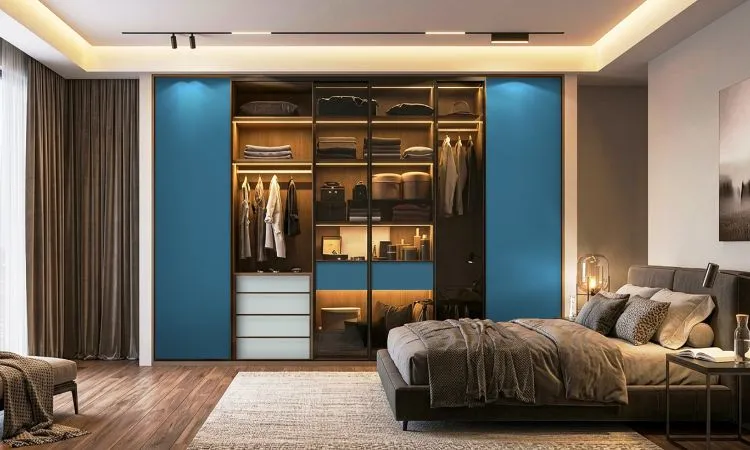
Wardrobe finishes are where a significant portion of the surface material decision for a bedroom sits, given how much wall space a full wardrobe occupies. The sunmica colour for wardrobe choice tends to drive the rest of the room’s material conversation, and the options available through sunmica colour for wardrobe cover enough range in terms of tone and texture that finding a finish suited to almost any bedroom direction is practical without extensive searching.
Furniture Scale and Spatial Proportion
Bedroom furniture in Indian homes has trended toward lower and more horizontal profiles, which suits both the ceiling heights of contemporary apartments and the visual direction toward spaciousness. A low-profile bed, a floating bedside table, and a wardrobe that reads as part of the wall rather than a freestanding piece all contribute to this horizontal quality that makes a room feel more restful and less crowded.
The wardrobe in a modern Indian bedroom is increasingly being designed as a wall element rather than a piece of furniture placed against a wall. Floor-to-ceiling coverage, sliding doors rather than hinged, and a surface finish that is chosen to work with the room rather than simply contain storage, all contribute to this reading. A wardrobe treated this way becomes a backdrop rather than an object in the room, and the bedroom reads as larger and more coherent as a result.
Lighting design in bedrooms has become more layered and intentional in recent years, moving away from a single ceiling fixture toward a combination of ambient, task, and accent sources. A bedside pendant, a warm LED strip behind the headboard, or a dedicated reading light built into the wardrobe unit are all ways of adding lighting functionality without the ceiling-mounted switch and fitting that makes a bedroom feel institutional. The combination of layered lighting with textured surface materials, particularly a louvers finish on a feature wall, produces the most significant visual change of any single design decision in a bedroom renovation context.