No, Quotex is not legal for regulated trading in India. As with ExpertOption, IQ Option, OctaFX, and Olymp Trade, you’ll encounter a split online — a cluster of affiliate marketing sites insisting Quotex is “legal” because it’s accessible and not criminally prohibited by name, against the clearer regulatory reality: Quotex appears on the RBI’s Alert List of unauthorized trading platforms, holds no SEBI registration, and its core product — binary/digital options — isn’t recognized as a legitimate financial instrument under Indian securities law.
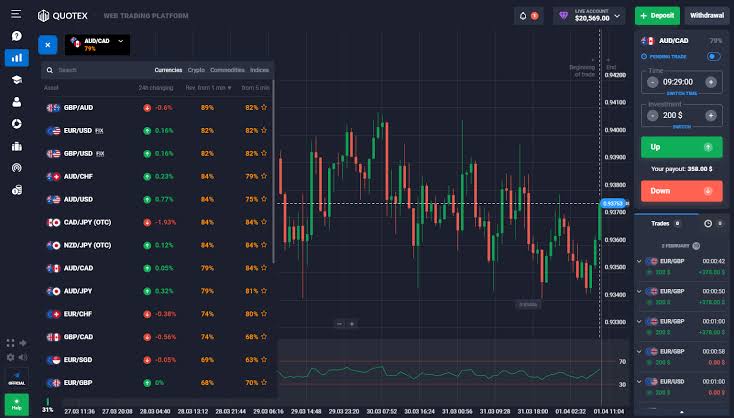
Quotex Is on the RBI’s Alert List
- The Reserve Bank of India released an official report on November 24, 2023, listing 75 trading platforms that are not registered or authorized in India — Quotex was explicitly named on this list.
- Quotex is listed on the RBI’s Alert List of unauthorized Electronic Trading Platforms (ETPs), the same formal regulatory designation used to flag platforms like ExpertOption, IQ Option, OctaFX, and Olymp Trade as not approved for Indian users.
- This remains the case as of 2026 — Quotex continues to appear on the RBI Alert List, with no change in its unauthorized status.
No SEBI Registration
- Quotex is not registered with SEBI (Securities and Exchange Board of India), the regulator that governs legal trading platforms and brokers operating in India. For any financial platform to legally offer trading services to Indian residents, SEBI registration (or RBI authorization, for forex-specific activity) is required.
- SEBI has not licensed or authorized any binary options broker in India, and neither NSE nor BSE offer binary options as a trading product — this isn’t a Quotex-specific gap, it reflects the broader fact that this entire product category sits outside India’s regulated securities framework.
Binary/Digital Options Aren’t Recognized Financial Instruments
- Binary options (and Quotex’s “digital options” branding, which is functionally the same product under a different name) are not recognized as a legitimate financial instrument under Indian securities regulation.
- SEBI treats this category as functioning more like gambling than genuine investment — a fixed-outcome, short-duration wager on whether an asset’s price moves up or down, with a predetermined payout or total loss as the only two results.
- Relabeling the product doesn’t change its regulatory classification. Whether a platform calls it “binary options,” “digital options,” or “fixed-time trades,” the underlying structure determines how it’s treated under Indian law, not the marketing terminology.
The FEMA Problem: Funding Your Account Carries Its Own Risk
- Under the Foreign Exchange Management Act (FEMA), 1999, binary options are not an approved product category for outbound remittance — meaning sending money from India to fund a Quotex account can itself constitute a violation, independent of the trading activity.
- Indian residents are only permitted to trade forex through platforms specifically approved by the RBI and SEBI. Since Quotex holds neither, both the act of depositing funds and the trading activity itself sit outside the legally sanctioned framework.
- This FEMA concern applies regardless of deposit size — the legal basis for the RBI’s position doesn’t scale down for smaller amounts.
“Not Explicitly Banned” vs. “Legal”: The Same Misleading Argument
You’ll see this framing repeated across the more promotional sources covering Quotex, and it’s worth directly addressing, since it’s the same flawed reasoning used to defend other unauthorized platforms:
- The absence of a specific criminal statute naming “Quotex” is not the same as the platform being authorized. No individual criminal law needs to name a platform by name for its core activity — unlicensed forex/binary trading and unauthorized outbound remittance — to already be covered by existing FEMA, SEBI, and RBI regulations.
- Some sources describe this as a “grey zone” specifically because holding a Quotex account isn’t itself a distinct criminal offense, but this framing obscures the more important point: you have zero regulatory protection, no SEBI complaint mechanism, and genuine FEMA exposure the moment real money changes hands — which is a meaningfully different situation from something being genuinely, safely “legal.”
What Happens If You Trade on Quotex From India
- You cannot file a complaint with SEBI or the RBI if a dispute arises, since Quotex isn’t registered with either body — India’s investor protection and grievance mechanisms simply don’t extend to your relationship with the platform.
- There’s no regulatory body providing recourse if Quotex withholds your funds or closes your account. Any dispute resolution would depend entirely on Quotex’s own internal processes or whatever jurisdiction its foreign licensing (if any) technically falls under — neither of which gives you practical protection as an Indian user.
- Loss of funds without legal recourse is the core practical risk repeatedly emphasized across the more careful analyses of this platform — a risk that exists independent of whether you ultimately win or lose on individual trades.
Why So Many Sources Claim Otherwise
As with other offshore binary options platforms, a cluster of affiliate marketing and broker-review content confidently asserts Quotex is “legal and reliable” in India, often citing its accessibility, competitive payouts, or international licensing in other jurisdictions. These sources typically carry a financial incentive through referral commissions to downplay regulatory risk — a genuine conflict of interest that should be weighed heavily against the more carefully sourced analysis confirming Quotex’s presence on the RBI’s official unauthorized platforms list.
Legal Alternatives for Trading in India
For anyone drawn to Quotex for accessible, app-based trading, genuinely legal and regulated paths exist:
- Equity and derivatives trading through SEBI-registered brokers on NSE/BSE
- Currency derivatives (limited to RBI/SEBI-approved INR-paired and cross-currency pairs) through SEBI-registered brokers
- Mutual funds and ETFs, regulated under SEBI oversight
Frequently Asked Questions
Q1. If Quotex appeared on the RBI’s November 2023 list of unauthorized platforms, has anything changed to make it compliant since then?
No — as of 2026, Quotex remains on the RBI Alert List with no SEBI registration, meaning its regulatory status in India has not changed since that initial listing; there’s no indication the platform has pursued or obtained the authorization that would be required to legally operate in India.
Q2. Does Quotex being “not officially banned” by name mean I can’t get in legal trouble for using it?
Not quite — while there’s no specific criminal statute naming Quotex, your activity on the platform is still governed by existing FEMA restrictions on outbound remittance for speculative/binary trading purposes, meaning the underlying activity (not the platform’s name) is what creates legal exposure, regardless of whether a law mentions Quotex specifically.
Q3. Is Quotex’s “digital options” product legally different from binary options, since it uses different terminology?
No — this is the same functional product under different branding; the underlying structure (a fixed-outcome, short-duration wager on asset price direction) is what determines its regulatory classification under Indian law, and relabeling it doesn’t change how SEBI and the RBI treat the category.
Q4. What’s the safest way to confirm whether a trading platform like Quotex is genuinely authorized to serve Indian users?
Check directly whether the platform appears on SEBI’s list of registered brokers (available through SEBI’s official website) or cross-reference it against the RBI’s published Alert List of unauthorized forex/trading platforms — relying on a platform’s own marketing claims or third-party review sites with referral incentives is not a reliable way to verify actual regulatory status.