Iron is one of the most essential minerals for human health, playing a fundamental role in producing haemoglobin (the protein that carries oxygen throughout the body), supporting immune function, enabling energy production at the cellular level, and maintaining cognitive function. Iron deficiency remains the world’s most common nutritional deficiency, affecting an estimated 30% of the global population and disproportionately affecting women of reproductive age, pregnant women, growing children, and vegetarians. In India specifically, iron deficiency anaemia affects over 50% of women and nearly 60% of children under five — genuinely alarming numbers that make understanding iron-rich foods a public health necessity, not just an individual optimisation question.
Understanding Heme vs Non-Heme Iron
Before the food list, one critical distinction: dietary iron exists in two forms with dramatically different absorption rates. Heme iron, found only in animal products (meat, poultry, fish, and seafood), is absorbed by the human body at approximately 15-35% efficiency. Non-heme iron, found in plant foods and eggs, is absorbed at only 5-12% efficiency — meaning vegetarians need to consume approximately 1.8 times more iron than meat-eaters to achieve equivalent iron status. This absorption gap is why iron deficiency is meaningfully more common among vegetarians and why understanding absorption enhancers (vitamin C, meat/fish/poultry factor) and inhibitors (tea, coffee, calcium consumed with meals) matters enormously.
The daily iron requirement varies substantially: adult men need approximately 8 mg daily, adult women 18 mg daily (much higher due to menstrual losses), pregnant women 27 mg daily, and vegetarians of both sexes need approximately 1.8 times these amounts.
1. Shellfish and Oysters — The Heme Iron Champions
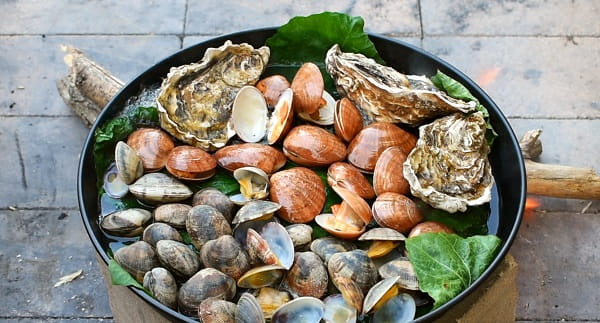
Shellfish, particularly oysters, clams, and mussels, are among the most iron-dense foods available. A single 100-gram serving of clams provides approximately 28 mg of iron — well over an entire day’s requirement in a single small serving. Oysters provide approximately 7-9 mg per serving, mussels around 6 mg, and shrimp meaningful amounts of iron alongside high-quality protein and zinc.
The iron in shellfish is predominantly heme iron, meaning absorption is far more efficient than from any plant source. Shellfish also provides vitamin B12 (essential for red blood cell production alongside iron), zinc, selenium, and omega-3 fatty acids in the same servings — making them arguably the single most nutritionally efficient food for addressing iron deficiency in populations where they’re accessible and culturally acceptable.
For Indian consumers, coastal traditions incorporate shellfish extensively — prawns, crabs, and mussels feature prominently in Goan, Bengali, coastal Kerala, and Andhra cuisines. Inland populations have less regular access, making red meat and organ meats more practically relevant iron sources for non-vegetarian iron support.
Practical addition: 1-2 servings of shellfish per week where accessible and culturally appropriate, prepared with minimal oil and traditional spice preparations that preserve nutrient content.
2. Red Meat and Organ Meats
Red meat — beef, mutton, and lamb — provides among the most concentrated heme iron sources widely available, with approximately 2.5-3 mg of iron per 100-gram serving of lean beef. More importantly, organ meats, particularly liver, provide extraordinary iron concentrations: 100 grams of beef liver contains approximately 6.5 mg of iron, chicken liver approximately 11.6 mg, and this iron is highly bioavailable heme iron absorbed at maximum efficiency.
Beyond iron itself, organ meats and red meat provide vitamin B12, folate, zinc, and complete high-quality protein — the exact nutrient combination needed to actually produce new red blood cells and address iron deficiency comprehensively. The “MFP factor” (meat, fish, and poultry factor) also enhances non-heme iron absorption from plant foods consumed in the same meal, meaning even a small serving of red meat can multiply the iron absorbed from accompanying vegetarian dishes.
Chicken (particularly darker meat like thighs and drumsticks) provides moderate iron content with excellent bioavailability. Dark poultry meat contains approximately 1.3 mg per 100 grams versus chicken breast at approximately 0.7 mg.
For Indian consumers, moderate consumption of mutton, chicken (especially dark meat), and liver preparations like kaleji provides efficient iron intake. Traditional Indian preparations that combine meat with vitamin C-rich tomatoes and onions further enhance absorption.
Practical addition: 2-3 servings of red meat or dark poultry per week, with occasional liver preparations (once every 1-2 weeks) providing concentrated iron doses.
3. Legumes — The Vegetarian Iron Anchor
Legumes are the single most important iron category for vegetarians, providing substantial non-heme iron alongside protein, fibre, folate, and B vitamins in the same servings. A cup of cooked lentils provides approximately 6.6 mg of iron, cooked chickpeas approximately 4.7 mg, cooked kidney beans (rajma) approximately 5.2 mg, and cooked soybeans approximately 8.8 mg — genuinely substantial iron contributions from single servings.
The critical practical point for vegetarians: pair legume consumption with vitamin C-rich foods to dramatically enhance iron absorption. Adding tomatoes, lemon juice, bell peppers, amla, or citrus to a meal with dal can increase iron absorption from that meal by 2-3 times compared to consuming the same legumes without vitamin C accompaniment. This is why traditional Indian preparations combining dal with tomato-based tadkas, chickpea preparations with lemon and coriander garnishes, and rajma cooked with tomato-onion masala are nutritionally superior to blander preparations — the culinary tradition inherently optimises iron absorption.
Tofu and tempeh (fermented soybeans) provide comparable iron benefits for those following vegan or East Asian dietary patterns.
Practical addition: At least one serving of legumes daily as part of main meals, consistently paired with vitamin C-rich accompaniments (tomatoes, lemon juice, amla, citrus, or bell peppers).
4. Dark Leafy Greens and Iron-Rich Vegetables
Dark leafy greens — spinach (palak), kale, methi (fenugreek greens), amaranth (chaulai), and drumstick leaves (moringa) — provide meaningful non-heme iron alongside vitamin C (which enhances absorption from the same food), folate, and other essential nutrients supporting red blood cell production.
Cooked spinach provides approximately 6.4 mg of iron per cup, though bioavailability is limited by oxalates present in raw spinach. Cooking spinach and other greens significantly improves iron absorption by breaking down these absorption inhibitors — Popeye was somewhat right, but only about cooked spinach, not raw.
Other iron-contributing vegetables include broccoli (which conveniently pairs its non-heme iron with vitamin C in the same food), sweet potatoes (particularly with skin), unpeeled potatoes, tomatoes (particularly dried or concentrated), and Brussels sprouts. Moringa leaves specifically deserve mention as a traditional Indian source of extraordinary iron concentrations alongside multiple other nutrients.
Practical addition: One serving of cooked dark leafy greens daily, prepared as sabzi, dal-palak, saag preparations, or added to soups. Consuming with a small amount of ghee or oil enhances absorption of fat-soluble vitamins that support red blood cell production.
5. Pumpkin Seeds, Nuts, and Fortified Foods
Pumpkin seeds are among the most iron-dense seeds available, providing approximately 2.5 mg of iron per ounce (28 grams) — a genuinely substantial contribution from a small snack serving. Sesame seeds, hemp seeds, flax seeds, and cashews also provide meaningful iron content alongside healthy fats and protein.
Fortified breakfast cereals, iron-fortified flour, and enriched grain products play an important role in populations where dietary iron intake is genuinely challenging — many Indian government nutrition programs specifically fortify staple foods with iron to address widespread deficiency at population scale.
Dried fruits, particularly prunes, apricots, and raisins, provide concentrated iron content in convenient snack form. Blackstrap molasses, though less commonly consumed in India, provides exceptional iron concentrations.
Cooking in cast-iron cookware — a traditional practice in many Indian households — genuinely increases the iron content of foods prepared in it, particularly acidic foods like tomato-based curries. This is a documented, meaningful contribution to overall iron intake that has been used for centuries.
Practical addition: A small daily handful of mixed nuts and seeds including pumpkin seeds. Occasional consumption of iron-fortified cereals or grains. Use of traditional iron cookware for cooking, particularly for tomato-based preparations.
Practical Tips to Maximise Iron Absorption
Pair non-heme iron foods with vitamin C sources at the same meal. Avoid tea, coffee, and calcium supplements within 1-2 hours of iron-rich meals (these substantially reduce absorption). Combine plant and animal iron sources when possible for enhanced absorption. Consider iron cookware for traditional Indian cooking styles.
FAQs
Q: Can I get enough iron from a vegetarian diet?
A: Yes, but it requires more careful attention than a non-vegetarian diet. Vegetarians need approximately 1.8 times more iron than meat-eaters due to lower absorption from plant sources. Consistent daily consumption of legumes, leafy greens, seeds, and nuts, combined with vitamin C-rich accompaniments and cooking in iron cookware, can meet iron needs without meat.
Q: Does drinking tea affect iron absorption?
A: Yes, significantly. Tannins in tea and coffee can reduce iron absorption from a meal by up to 60% when consumed within 1-2 hours of eating iron-rich foods. If you drink tea or coffee regularly, consume them between meals rather than with meals, particularly meals rich in non-heme iron.
Q: Are iron supplements necessary?
A: Iron supplements are appropriate when documented iron deficiency exists and dietary changes alone cannot address it, particularly during pregnancy, heavy menstrual periods, or after diagnosed anaemia. However, unnecessary iron supplementation can cause side effects and, in some individuals, iron overload. Consult a doctor before starting iron supplements.
Q: Why is iron deficiency so common in India?
A: Multiple factors contribute: predominantly vegetarian dietary patterns with less bioavailable non-heme iron, high tea consumption with meals reducing absorption, inadequate consumption of iron-rich foods among lower socioeconomic groups, high prevalence of parasitic infections that increase iron losses, and inadequate dietary attention to iron intake during pregnancy and childhood growth periods.
Q: How can I tell if I’m iron deficient?
A: Symptoms include persistent fatigue, weakness, pale skin, shortness of breath during ordinary activity, brittle nails, hair loss, restless legs, difficulty concentrating, and unusual cravings for non-food items (pica). A simple blood test measuring haemoglobin, ferritin, and other iron markers provides definitive diagnosis. Consult a doctor if you suspect iron deficiency.