Is cutting trees on your own land legal in India? Often not without permission: most states have tree preservation laws that require a Tree Officer’s prior approval to fell trees even on private property, usually with compensatory planting, and the penalties include imprisonment and fines. Rules, exemptions and ratios differ widely by state and by tree species, so check your state’s law before anyone picks up an axe. This is general information, not legal advice.
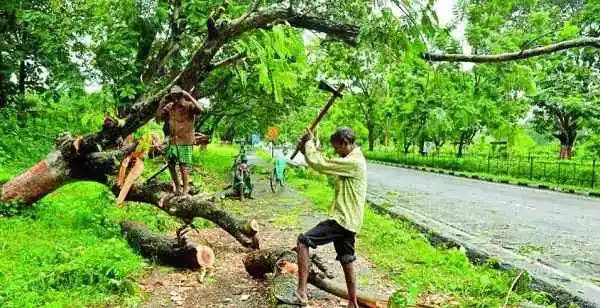
The Rule in Brief
- Ownership isn’t enough: state tree acts cover private land in many states
- Permission: from the Tree Officer or Tree Authority, usually against a written application
- Replacement: compensatory planting is a standard condition, with ratios from 2 to 1 up to 10 to 1
- Exemptions: some states exempt certain species, such as coconut, banana, guava and cashew in Karnataka
- Penalties: imprisonment and fines under state acts, with Delhi’s reported at up to one year
Why Owning the Land Isn’t the End of It
Trees are treated as more than property.
- Owning land does not automatically give you the right to cut trees on it, and cutting green trees on public or private property requires prior government permission under state tree preservation acts, according to the Obnews guide
- Many landowners believe they can cut a tree growing on their own property whenever they like, according to the same source, which describes that belief as wrong
- A plainer wording in one state act says no person shall fell, remove or dispose of a tree except with the previous permission of the Tree Officer, according to Indiaserv’s quote
The Delhi Example
The capital’s law is among the strictest.
- The Delhi Preservation of Trees Act, 1994 applies to every tree in the National Capital Territory, public or private, according to How To Help
- Anyone wanting to remove a tree must apply to the Tree Officer under Section 9, with ownership documents and the girth of the trees measured at 1.85 metres from the ground, according to a Kaanoon answer
- Even a dead tree needs a permit, according to How To Help
- A permit is specific to the number and species of trees, according to the same source
What Counts as a Tree
The definition decides what’s covered.
- Under the Delhi Act, a tree is a woody plant whose trunk is at least 5 cm in diameter at 30 cm from the ground and at least one metre tall, according to the Kaanoon answer
- The Rules refer to girth measured at 1.85 metres, according to the same source, so the definition and the measuring height don’t match, which is a point to raise with the Tree Officer
- Other states use their own definitions, often by girth or age
How a Permit Works
The process is document-driven.
- The application states ownership of the land, the number and kind of trees and the reason for cutting, according to Kaanoon
- After inspection, the Tree Officer may grant permission in whole or in part, or refuse it with reasons recorded in writing
- A deemed permission under Section 9(4) if the officer doesn’t decide within 60 days exists in Delhi’s Act, but the Supreme Court ordered that no one shall act on it without the court’s permission, according to The Tribune
The 50-Tree Threshold
Large-scale felling gets extra scrutiny.
- The Supreme Court ordered a tree census in Delhi and said no felling of 50 or more trees can happen without prior permission of the Central Empowered Committee, according to The Tribune
- Such permission should carry a condition on planting trees unless the case is exceptional
Replacement Planting
The ratios vary.
- The standard requirement is two new trees for every one cut, though some states are stricter, and Uttar Pradesh amended its rules to require 10 saplings per tree, according to Legal Shouts
- In Delhi, the standard is 10 saplings for every tree cut, according to How To Help, citing Section 10 of the Act
- The RTI wiki says compensatory plantation at 1:10 with survival care over several years is typical
- Because the ratios differ, ask the Tree Officer what applies in your area
Penalties
They run from fines to prison.
- The Karnataka Preservation of Trees Act, 1976 provides imprisonment and fine under Section 22, according to the RTI wiki
- The Maharashtra (Urban Areas) Protection and Preservation of Trees Act, 1975 provides imprisonment up to one year and a fine under Section 21
- The Delhi Act provides imprisonment up to one year and a fine under Section 24, according to the same source
- Legal Shouts states a penalty of ₹10,000 or three months’ imprisonment or both under “the Act,” without specifying which, so treat the figures as indicative and check the state law
- Mandatory restoration and compensatory plantation can be ordered on top of that, according to the RTI wiki
States and Their Laws
Each has its own statute.
- Examples include the Maharashtra (Urban Areas) Preservation of Trees Act, 1975, the Delhi Preservation of Trees Act, 1994, the Karnataka Preservation of Trees Act, 1976, the Tamil Nadu Preservation of Private Forest Act, the Punjab Land Preservation Act, 1900 and the Telangana Water, Land and Trees Act, according to Legal Shouts
- Maharashtra requires approval from the municipal corporation or panchayat even on private land, according to India Employment News
- Karnataka exempts species such as coconut, banana, guava and cashew, according to Obnews, which means orchard and plantation trees may be treated differently from ornamental or forest species
Forest Laws Overlap
Some land isn’t simply “yours.”
- The Indian Forest Act, 1927 can apply, and Section 33 provides penalties of imprisonment for up to six months for cutting trees in protected forests, according to Indiaserv
- Land that is forest in character may be treated as forest even if not officially recorded, following the Godavarman case, according to the same source, which matters for large wooded plots
- If your land includes a patch of old woodland, check whether it’s classified as forest
Dead, Diseased or Dangerous Trees
An exception isn’t automatic.
- Even a dead tree or one leaning dangerously towards your house needs an application to the Tree Officer, who inspects and gives a “permission to fell,” according to Indiaserv
- In an emergency, document the danger with photographs and notify the authority immediately, though these sources don’t describe an emergency exception
Pruning and Transplanting
Trimming isn’t a free pass either.
- Delhi’s Act covers cutting, pruning or transplanting, requiring permission from the forest department, according to Obnews
- Light trimming of branches for upkeep is treated differently from heavy pruning, and the sources I found don’t draw the line precisely, so ask the Tree Officer
Practical Steps Before You Cut
A short routine avoids trouble.
- Identify your state’s tree law and the authority, such as the Tree Officer, Tree Authority or forest department
- Check whether the species is exempt, such as fruit trees in some states
- Measure the tree as the law requires and take photographs
- Apply with your ownership documents and the reason for felling
- Wait for the written permit, and make sure it names the trees and number
- Plan the compensatory planting and keep proof
If You See Illegal Felling
Neighbours have options.
- Ask the workers for the on-site permit, and report to the police or Tree Officer if they can’t show one, according to How To Help
- Use an RTI application to find out what permission was granted and whether compensatory plantation happened, according to the same source and the RTI wiki
- The National Green Tribunal and the Forest Department are other complaint routes, according to the RTI wiki
Where the Sources Disagree
A few details clash.
- The compensatory ratio, 2 to 1, 10 to 1 or something else
- The penalty figures, which differ by act and source
- Whether trees on private land are “public assets,” which is an overstatement in one guide
- Many of these are legal explainers, so check your state’s act
FAQs
Q1. Is cutting trees on your own land legal in India?
Often only with permission. Most state tree acts require a Tree Officer’s prior approval to fell trees on private land, usually with compensatory planting.
Q2. Do I need permission to cut a dead tree?
Yes, in places like Delhi. Even a dead or dangerous tree needs a permit, so apply to the Tree Officer and keep photographs.
Q3. What is the penalty for cutting trees without permission?
State acts provide fines and imprisonment, with Delhi’s and Maharashtra’s reported at up to one year, plus orders for compensatory plantation.
Q4. Are any trees exempt?
Some states exempt certain species, such as coconut, banana, guava and cashew in Karnataka, but exemptions vary, so check your state’s list.