Food and beverage brands are among the most quietly powerful forces in global consumer culture. Unlike technology brands, which tend to rise and fall with product cycles and innovation waves, the great food brands sustain themselves across generations — built on flavour memory, cultural ritual, and the kind of habitual loyalty that begins in childhood and frequently lasts a lifetime. In 2026, with Kantar BrandZ’s global rankings reaching a record combined value of $13.1 trillion across the Top 100, and with food and beverage brands confirmed as among the most resilient categories — retaining the greatest share of their values even through volatile market conditions — the question of which food brands genuinely stand at the top of the global hierarchy deserves an answer grounded in verified 2026 data rather than assumption.
This article covers the top five food brands globally in 2026, drawing on Brand Finance’s April 2026 restaurant brand rankings alongside Kantar BrandZ’s broader brand valuation data and broader global brand influence metrics.
A Note on Methodology
“Top food brand” means different things depending on how you measure. By pure brand value in dollars — the financial worth attributed to the brand name and associated intellectual property — Brand Finance’s April 2026 rankings and Kantar BrandZ’s 2026 data are the most authoritative available benchmarks. By cultural influence, consumer love, and Instagram following, a different — sometimes overlapping but sometimes distinct — set of brands leads the conversation. This article primarily uses verified 2026 brand value data, supplementing with cultural impact and global reach analysis where relevant.
Quick Reference Table
| Rank | Brand | Brand Value (2026) | Category | Key Market |
| 1 | McDonald’s | USD 42.6 billion | QSR / Fast Food | Global, 100+ countries |
| 2 | Starbucks | USD 37 billion | Coffee / Café | Global, US & China |
| 3 | Nestlé | USD 20.7 billion+ | Packaged Foods | Global, 188 countries |
| 4 | KFC | USD 16.5 billion | QSR / Fast Food | Global, esp. China |
| 5 | Subway | USD 9.5 billion | QSR / Sandwiches | Global, 100+ countries |
1. McDonald’s — The World’s Most Valuable Food Brand
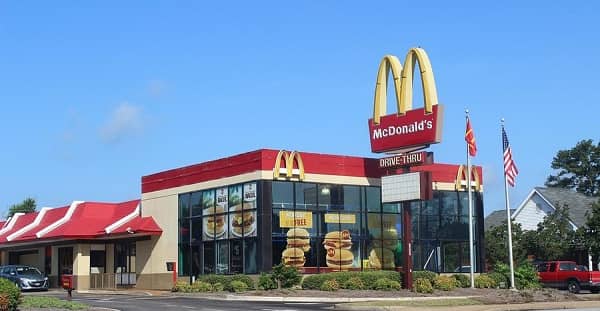
McDonald’s reclaimed the top spot in Brand Finance’s 2026 restaurant brand rankings with a brand value of USD 42.6 billion — a 5% increase year-on-year — and simultaneously ranks as the only food-related brand to crack the Kantar BrandZ Top 10 Global Brands at number 10 with a staggering $235.1 billion in overall brand value. The two figures measure different things, but together they confirm that McDonald’s is not just the world’s most valuable restaurant brand but one of the most powerful consumer brands of any category on earth.
What continues to sustain McDonald’s brand value through competitive pressure, pricing scrutiny, and evolving consumer preferences is a combination of sheer scale and disciplined franchise infrastructure that no competitor has remotely matched. The Golden Arches operates in over 100 countries, with a franchise model that generates steady income regardless of individual outlet performance, and a supply chain so deeply optimised over seven decades that consistency — the experience of eating a McDonald’s burger tasting essentially the same in Mumbai, Milan, or Minneapolis — is itself one of the brand’s most extraordinary achievements.
In 2026, McDonald’s faces genuine consumer affordability concerns in some markets, particularly the United States, where higher food prices and economic pressures have modestly reduced traffic from lower-income consumers. Its Brand Strength Index score (BSI) reflects some pressure on the emotional connection dimension, even as the financial value continues growing. But McDonald’s response — accelerating digital engagement through its loyalty app, investing in menu value deals, and expanding into newer markets — reflects the operational agility that has sustained its leadership through every previous challenge.
McDonald’s is also the most recognised food logo in the world. The Golden Arches arguably achieve the most instant, universal global recognition of any food-related visual symbol — a brand asset whose cultural embeddedness in the daily experience of billions of people makes it genuinely irreplaceable regardless of market fluctuations.
Why It Matters: Scale without equal. Over 40,000 locations globally. A franchise model producing consistent revenue across economic cycles. The most culturally embedded fast food brand in human history.
2. Starbucks — The World’s Most Valuable Coffee Brand
Starbucks holds second position in Brand Finance’s 2026 restaurant rankings with a brand value of USD 37 billion — but this number tells only part of the story, because 2026 represents a genuinely testing year for the Seattle coffee giant rather than a period of unchallenged dominance. Brand value fell 4% year-on-year, reflecting a convergence of challenges: tougher competition in China (Starbucks’ most important growth market), where domestic chains Luckin Coffee and Mixue have built formidable, value-led alternatives that have taken meaningful market share from premium Western café formats; lingering brand perception issues in some markets following labour disputes and boycott calls; and menu price increases that have modestly eroded the sense of value that keeps habitual Starbucks customers returning daily rather than weekly.
Yet the brand remains extraordinary by any historical measure. The fact that holding a Starbucks cup has become a social signal — a visual statement about lifestyle, sophistication, and morning ritual — in dozens of countries simultaneously represents a cultural brand achievement that most consumer companies spend billions trying and failing to replicate. Starbucks’ Instagram presence, loyalty programme ecosystem, and personalisation culture (the custom drink phenomenon, where millions of customers specify increasingly elaborate personal drink modifications) have created a deeply involving consumer relationship that generic competitors cannot easily displace.
The brand’s 2026 challenge is fundamentally about refreshing that relationship for a consumer base that is simultaneously more price-conscious and more culturally heterogeneous than at any previous point in Starbucks’ history. The resolution of that challenge will define whether Starbucks recovers its brand value trajectory or continues a period of gentle but persistent deflation.
Why It Matters: The world’s dominant premium café brand. 35,000-plus global locations. A loyalty programme among the most sophisticated of any food brand. Coffee culture architect across dozens of markets.
3. Nestlé — The World’s Most Valuable Packaged Food Brand
Nestlé occupies a category somewhat distinct from the restaurant brands above — rather than operating outlets, Nestlé creates the products that stock the world’s shelves, from KitKat and Maggi noodles to Nescafé, Milo, Purina pet food, and San Pellegrino water. Its brand value of over USD 20.7 billion from Brand Finance’s packaged food category rankings makes it the most valuable food manufacturing brand in the world by a considerable margin, operating across 188 countries with over 2,000 distinct brands within its portfolio.
What gives Nestlé its specific brand power is the combination of its scale, its multi-generational consumer relationships (Maggi noodles are a comfort food for entire childhoods across South and Southeast Asia; Nescafé is the morning ritual for hundreds of millions across Africa, Europe, and Latin America), and the extraordinary geographic reach that means Nestlé products are consumed somewhere in essentially every country on earth on virtually every day of the year.
In 2026, Nestlé’s most watched strategic development is the Ferrero Group’s acquisition of W.K. Kellogg (maker of Frosted Flakes and Froot Loops), which redraws the packaged food competitive landscape specifically in North America — a reminder that even at Nestlé’s scale, the packaged food category remains genuinely competitive and strategically contested. Nestlé itself has been progressively expanding its health science and premium nutrition categories alongside the core confectionery and beverage portfolio, reflecting a consumer shift toward functional food positioning that is reshaping the entire packaged food industry.
Why It Matters: 2,000-plus brands across 188 countries. Products consumed by billions daily. The world’s most geographically diversified food company. Multi-generational comfort food relationships across Asia, Africa, Europe, and Latin America.
4. KFC — The World’s Most Globally Successful Chicken Brand
KFC ranks third in Brand Finance’s 2026 restaurant brand rankings with a brand value of USD 16.5 billion — an 8% increase year-on-year — a performance reflecting the continued strength of KFC’s global expansion strategy even as it faces specific headwinds in parts of Europe. KFC’s defining characteristic as a global brand is its extraordinary success in China, where it is not merely a foreign fast food chain but one of the most trusted and most beloved dining brands in the country, having built over 10,000 Chinese locations with a localised menu approach that has given it a different character than the American QSR brand its name suggests.
KFC’s international success story more broadly illustrates a brand truth that McDonald’s shares: the combination of a globally recognisable core product (the fried chicken recipe with its “11 herbs and spices” mystique) with genuine local market adaptation (localised side dishes, region-specific menu items, and partnerships attuned to local food culture) allows the brand to feel simultaneously international and locally relevant — a combination most restaurant brands never successfully achieve.
Why It Matters: 27,000-plus global locations across 150 countries. The world’s leading fried chicken brand. Dominant QSR brand in China. Consistent 8% brand value growth driven by strong international momentum.
5. Subway — The World’s Largest Restaurant Chain by Location Count
Subway holds fourth position in Brand Finance’s 2026 restaurant rankings with a brand value of USD 9.5 billion — an impressive 18% brand value increase year-on-year, driven by a combination of overseas expansion, rising digital sales, and a genuine brand turnaround effort that has addressed years of stagnation in the US market by reinvesting in the international network that now accounts for a growing proportion of Subway’s global strength.
Subway’s most extraordinary brand statistic is its sheer location count: with approximately 37,000 outlets globally, it is the world’s largest restaurant chain by number of locations — more than McDonald’s, more than Starbucks, and more than any other food brand. This extraordinary penetration, across small cities, airports, highway service stations, hospitals, universities, and high streets in dozens of countries, gives Subway an omnipresence that translates into habitual consideration even among consumers who don’t regard it as their primary dining preference.
The brand’s 18% year-on-year growth in 2026 reflects that the brand reinvestment efforts of the past two years are beginning to generate measurable results — and that Subway’s fundamental appeal (customisable, relatively fresh, broadly affordable sandwiches) remains genuinely durable even in a competitive quick-service environment where dozens of alternatives now compete for the same convenience-driven lunch and snack occasion.
Why It Matters: World’s largest restaurant chain by location count. Strong 18% brand value growth in 2026. Rising digital sales and overseas expansion. Customisation-led appeal with universal accessibility across price points.
FAQs
Q: What is the most valuable food brand in the world in 2026?
A: McDonald’s leads Brand Finance’s 2026 restaurant brand rankings with a brand value of USD 42.6 billion — a 5% year-on-year increase. In Kantar BrandZ’s broader global brand rankings, McDonald’s is the only food-related brand to crack the Top 10, appearing at number 10 with an overall brand valuation of approximately $235.1 billion.
Q: Is Nestlé or McDonald’s the bigger food brand globally?
A: They operate in different segments and are measured differently. McDonald’s leads the restaurant and food service category. Nestlé leads the packaged food manufacturing category, with brand value exceeding USD 20.7 billion across its enormous multi-brand portfolio spanning 188 countries. Both are legitimately categorised among the world’s most powerful food brands by different metrics.
Q: Why has Starbucks’ brand value declined in 2026?
A: Starbucks’ brand value fell approximately 4% in 2026, reflecting tougher competition in China from domestic value-led alternatives like Luckin Coffee and Mixue, lingering perception challenges from labour disputes and boycott calls, and menu price increases that have modestly weakened the value perception that sustains daily habitual visits.
Q: Which food brand showed the fastest brand value growth in 2026?
A: Among the top restaurant brands, Chick-fil-A delivered the strongest percentage growth — 44% year-on-year to a brand value of USD 8.1 billion — driven by record revenues, expansion, and exceptional customer loyalty metrics, making it the fastest-growing restaurant brand by brand value growth percentage in 2026, though it falls just outside the top five by total value.
Q: Are beverage brands like Coca-Cola or Red Bull included in food brand rankings?
A: Brand Finance and Kantar BrandZ separate the food and beverage categories in their analyses. Beverage brands including Coca-Cola, Red Bull, Heineken, and Corona do appear in food and beverage rankings and exert significant cultural influence — Red Bull and Corona specifically are noted as F&B brands with notable cultural influence in 2026 brand analyses — but the top five positions in pure food brand rankings are dominated by the restaurant and packaged food companies detailed above.