When people hear the word “eye transplant,” many imagine that the whole eye can be replaced like a kidney or liver. In real medical practice, what patients usually mean is cornea transplant. The cornea is the clear front layer of the eye. When it becomes damaged, scarred, infected, cloudy, or irregular, vision can become badly affected. In some cases, a cornea transplant can help restore sight or reduce severe eye problems.
For Indian families, this treatment can be life-changing. A person who cannot see clearly may struggle with studies, work, driving, reading, mobile use, household tasks, and daily independence. But choosing the right hospital is very important because cornea transplant depends on donor tissue quality, eye-bank support, cornea specialist experience, surgical technique, infection control, and long-term follow-up.
India has many reputed eye hospitals with cornea departments and eye banks. Some are large charitable institutions, some are government centres, and some are private super-speciality hospitals. Below is a practical list of the top 10 famous eye transplant hospitals in India in 2026 for patients who want a reliable starting point before consultation.
Quick Overview: Top 10 Eye Transplant Hospitals in India 2026
| Rank | Hospital / Institute | City / Major Presence | Known For | Best For |
| 1 | Sankara Nethralaya | Chennai, Kolkata | Cornea services and eye bank support | Advanced cornea care |
| 2 | L V Prasad Eye Institute | Hyderabad and network centres | Large eye-care network and cornea services | Comprehensive eye treatment |
| 3 | Aravind Eye Hospital | Madurai, Chennai, Coimbatore and more | Eye bank and high-volume corneal transplants | Accessible cornea transplant care |
| 4 | AIIMS Dr. R. P. Centre | New Delhi | National Eye Bank and government tertiary care | Public-sector advanced eye care |
| 5 | Narayana Nethralaya | Bengaluru | Eye banks and corneal transplant services | South India cornea patients |
| 6 | Shroff Eye Centre | Delhi-NCR | Cornea specialists and transplant care | Delhi-NCR patients |
| 7 | Dr Agarwal’s Eye Hospital | Pan India | Cornea treatment and large eye hospital network | Multi-city private care |
| 8 | Sankara Eye Hospital | Multiple Indian cities | Eye banking and charitable eye care | Affordable eye-care access |
| 9 | Centre for Sight | Delhi-NCR and other cities | Cornea transplant and eye-care network | Urban private eye care |
| 10 | Susrut Eye Foundation & Research Centre | Kolkata | Cornea transplant and eye bank services | East India cornea care |
Important Note: This list is for general information. The best hospital for one patient may not be best for another. Always consult a qualified cornea specialist and check donor tissue availability, cost, waiting time, risks, and follow-up requirements.
1. Sankara Nethralaya, Chennai
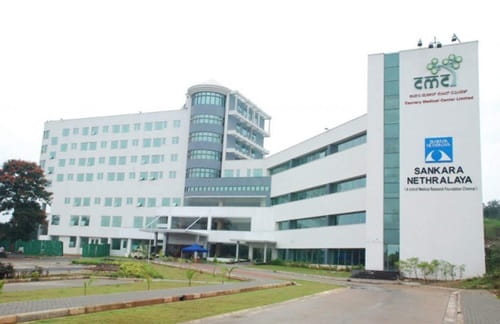
Sankara Nethralaya is one of India’s most respected eye hospitals and is widely known for advanced ophthalmology services. Its cornea department and eye-bank support make it a strong name for patients looking for corneal transplant treatment.
The hospital handles different corneal problems such as corneal scars, keratoconus, corneal infections, corneal dystrophies, eye trauma, and failed previous grafts. Patients may be advised different types of corneal transplant depending on the damaged layer of the cornea. These may include full-thickness transplant or partial-thickness procedures.
Sankara Nethralaya may be suitable for patients who want specialist-led advanced eye care in a reputed institution. Since the hospital is very well known, patients should plan appointments properly and carry previous eye reports, scans, prescriptions, and surgery details.
Why patients consider it: Strong cornea services, reputed eye-care brand, eye-bank support, and advanced treatment setup.
2. L V Prasad Eye Institute, Hyderabad
L V Prasad Eye Institute, commonly known as LVPEI, is one of the most famous eye-care institutions in India. It has a large network and is known for clinical care, research, training, and community eye health.
For corneal transplant patients, LVPEI is a strong option because of its comprehensive eye-care approach. Patients with corneal blindness often need more than surgery. They may need diagnosis of the original cause, treatment of infection, dry eye care, contact lens support, glaucoma evaluation, retina check-up, and long-term monitoring.
LVPEI may be suitable for patients from Telangana, Andhra Pradesh, Odisha, Karnataka and other states who want treatment in a reputed eye-care institute with specialist support.
Why patients consider it: Comprehensive eye-care network, specialist services, structured treatment, and strong reputation.
3. Aravind Eye Hospital
Aravind Eye Hospital is one of India’s most respected eye-care systems. It has centres in Madurai, Chennai, Coimbatore, Tirunelveli, Pondicherry, Salem and other locations. It is especially known for high-volume eye care and accessible treatment.
Aravind’s eye banks and cornea services make it an important name for corneal transplant patients. The hospital manages corneal infections, corneal opacity, keratoconus, trauma-related damage, and other corneal diseases.
One major strength of Aravind is its patient reach. Many people from smaller towns and rural areas travel to Aravind because of its reputation, system-driven care, and experience in eye surgeries.
Why patients consider it: Strong eye-bank support, high-volume eye-care experience, multiple centres, and accessible treatment model.
4. AIIMS Dr. R. P. Centre for Ophthalmic Sciences, New Delhi
Dr. R. P. Centre for Ophthalmic Sciences at AIIMS New Delhi is one of India’s most important government eye-care institutions. It also houses the National Eye Bank, making it a major centre for corneal transplant-related services.
For patients who want government tertiary-care support, AIIMS is a very important option. It is suitable for complicated corneal cases, patients needing expert opinion, and families looking for advanced care in a public-sector institution.
However, because AIIMS receives a huge number of patients, waiting time and documentation can be challenging. Patients should be prepared for proper registration, evaluation, tests, and follow-up visits.
Why patients consider it: Government tertiary-care reputation, National Eye Bank, expert teams, and advanced ophthalmology services.
5. Narayana Nethralaya, Bengaluru
Narayana Nethralaya is a well-known eye hospital in Bengaluru and is recognised for advanced eye care, including corneal services and eye-bank activities. It is a practical choice for patients in Karnataka and nearby states.
The hospital offers care for corneal disorders, keratoconus, corneal scars, infections, and transplant-related needs. Its eye-bank foundation also supports cornea donation awareness and corneal blindness care.
Narayana Nethralaya may be useful for patients who want private specialist eye care in Bengaluru with access to cornea specialists and modern diagnostic systems.
Why patients consider it: Bengaluru-based specialist eye care, cornea transplant services, eye-bank support, and advanced facilities.
6. Shroff Eye Centre, Delhi-NCR
Shroff Eye Centre is a well-known eye hospital in Delhi-NCR with cornea specialist services. It is often considered by patients looking for private eye care in Delhi, especially for corneal problems, dry eye, keratoconus, corneal scars, and transplant-related consultation.
The centre may be suitable for patients who want specialist consultation in a private setup and prefer treatment within Delhi-NCR. It can also be useful for second opinions before surgery.
Before treatment, patients should ask which type of cornea transplant is needed, whether donor tissue is available, what the waiting time is, and how many follow-ups will be required.
Why patients consider it: Delhi-NCR location, cornea specialists, private eye-care setup, and transplant-related services.
7. Dr Agarwal’s Eye Hospital
Dr Agarwal’s Eye Hospital is one of India’s large eye-care hospital networks with presence in many cities. It offers cornea treatment and corneal transplantation services, making it a practical option for patients who want access to a known private eye hospital chain.
The hospital network may be useful for patients who prefer a branch closer to home. This matters because cornea transplant needs repeated follow-ups after surgery. Patients may need medicines, eye pressure checks, graft monitoring, infection watch, and suture management.
Dr Agarwal’s may suit patients who want private treatment, modern facilities, and multi-city access.
Why patients consider it: Large eye hospital network, cornea services, private care, and easier access in many cities.
8. Sankara Eye Hospital
Sankara Eye Hospital, under Sankara Eye Foundation India, is known for combining eye-care services with charitable work. It has multiple centres and is involved in eye banking and cornea-related care.
This hospital group may be especially useful for patients looking for affordable eye-care access without compromising structured treatment. Its eye-bank activities also make it relevant for corneal transplant services.
Sankara Eye Hospital can be considered by patients who want treatment in cities where the group has an active centre and proper cornea specialist availability.
Why patients consider it: Eye-bank work, charitable model, multiple locations, and accessible eye care.
9. Centre for Sight
Centre for Sight is a well-known private eye-care network with centres in Delhi-NCR and other cities. Some of its centres offer cornea transplant and cornea-related services.
It may be suitable for urban patients who want private eye-care consultation, advanced diagnostics, and a network-based treatment experience. Patients with corneal opacity, keratoconus, corneal scarring, and previous eye surgery complications may consult a cornea specialist here.
Since services may vary by branch, patients should confirm whether the selected centre has a cornea transplant facility and an experienced cornea surgeon.
Why patients consider it: Eye-care network, urban accessibility, cornea services, and private consultation setup.
10. Susrut Eye Foundation & Research Centre, Kolkata
Susrut Eye Foundation & Research Centre is a known eye-care institution in Kolkata and offers cornea treatment and transplant-related services. It also has eye-bank support for donor corneal tissue.
For patients in West Bengal and East India, Susrut can be a practical option because travelling to Delhi, Chennai or Hyderabad may not always be easy. The centre offers treatment for corneal ulcers, keratoconus, corneal transplant, ocular surface problems, and advanced corneal conditions.
It may suit patients who want regional access to cornea care with specialist support in Kolkata.
Why patients consider it: Kolkata-based cornea care, eye-bank support, transplant services, and East India accessibility.
What Is Actually Transplanted in an Eye Transplant?
In most cases, doctors do not transplant the full eye. They transplant the cornea, which is the clear front part of the eye. If this layer becomes cloudy or damaged, light cannot enter properly and vision reduces.
A cornea transplant may be advised for conditions like corneal scarring, keratoconus, corneal dystrophy, severe infection, chemical injury, trauma, or failed previous transplant.
Types of Cornea Transplant
Full-Thickness Cornea Transplant
This replaces the entire damaged cornea with a donor cornea. It may be used when damage affects all corneal layers.
Partial-Thickness Cornea Transplant
In some patients, only the damaged layer is replaced. Procedures like DALK, DSEK, or DMEK may be advised depending on which layer is affected.
Therapeutic Cornea Transplant
This may be done to control severe infection or save the eye when medicines are not enough.
How to Choose the Right Eye Transplant Hospital
Check for a Cornea Specialist
Not every eye hospital is equally strong in cornea transplant. Ask whether the hospital has a dedicated cornea department and experienced cornea surgeons.
Ask About Eye-Bank Support
Cornea transplant depends on donor tissue. Ask about tissue availability, waiting time, tissue quality, and whether the hospital has eye-bank access.
Understand the Exact Diagnosis
Do not rush into surgery without knowing why vision is reduced. Sometimes cataract, retina disease, glaucoma, or optic nerve damage may also affect vision. Cornea transplant helps only when the cornea is the main problem.
Ask About Risks and Follow-Up
Cornea transplant needs careful follow-up. Risks may include graft rejection, infection, high eye pressure, stitches-related problems, and vision changes. Patients must use medicines properly after surgery.
Compare Cost Clearly
Cost can vary depending on hospital, city, type of transplant, donor tissue, tests, medicines, and follow-up. Ask for a written estimate before surgery.
FAQs
Q1. Is full eye transplant possible in India?
In routine medical practice, full eye transplant is not done like kidney or liver transplant. What people usually call “eye transplant” is cornea transplant, where the damaged cornea is replaced with healthy donor corneal tissue.
Q2. Which is the best eye transplant hospital in India?
There is no single best hospital for every patient. Sankara Nethralaya, LV Prasad Eye Institute, Aravind Eye Hospital, AIIMS R. P. Centre, Narayana Nethralaya, Shroff Eye Centre, Dr Agarwal’s Eye Hospital, Sankara Eye Hospital, Centre for Sight, and Susrut Eye Foundation are among famous names for cornea-related care.
Q3. How much does cornea transplant cost in India?
The cost can vary widely depending on hospital, city, type of transplant, donor tissue, tests, medicines, and follow-up care. Government hospitals may be more affordable, while private hospitals may cost more. Patients should ask for a written estimate before surgery.
Q4. Can vision become completely normal after cornea transplant?
Some patients get very good vision after cornea transplant, but results depend on the eye condition, retina health, optic nerve health, graft clarity, healing, and follow-up care. Glasses, contact lenses, or further treatment may still be needed after surgery.