No, tasers and stun guns are not legal for civilian use in India. Despite being widely marketed online as “self-defense tools,” and despite some sellers claiming they’re freely legal to carry, the actual legal position is unambiguous: these devices are classified as prohibited arms under the Arms Act, 1959, and are restricted almost exclusively to police and authorized security personnel.
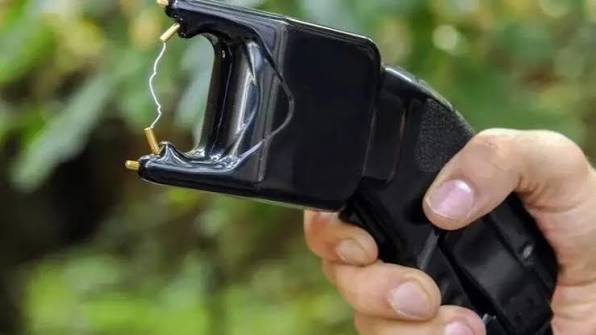
The Governing Law: Section 25(1A) of the Arms Act, 1959
- Stun guns and tasers are categorized as “prohibited arms” under Section 25(1A) of the Arms Act, 1959. This is a significant legal classification — “prohibited arms” sit in a stricter category than ordinary licensable weapons like standard firearms, which civilians can at least apply for a license to own under certain conditions.
- Unlike regular firearms, where licenses are occasionally granted to civilians who can demonstrate a genuine need, stun gun and taser licenses are almost exclusively reserved for law enforcement and specific authorized agencies.
- The underlying reasoning, as explained in legal commentary on the Act, is that stun guns pose a threat to public peace or safety of a magnitude the law treats as warranting prohibition, not just regulation — the concern being that widespread civilian possession carries a high probability of misuse.
Who Is Actually Authorized to Use Them
- Police officials are the primary authorized users of stun guns and tasers in India.
- Specialized security forces, such as the National Security Guard (NSG), are permitted to use these devices under strict operational guidelines.
- Private security guards are explicitly not authorized to carry tasers under the Arms Act — this is a common misconception, since people sometimes assume private security personnel have broader weapon allowances than ordinary civilians, but tasers specifically remain restricted to government law enforcement and specialized agencies.
Why “Self-Defense” Doesn’t Create an Exception
This is the point where most confusion and misinformation arises, so it’s worth being direct about it.
- Indian law does recognize a general right to self-defense under the Bharatiya Nyaya Sanhita (which replaced the IPC) — you’re legally permitted to defend yourself against an attack using reasonable force.
- However, this right does not extend to legalizing the possession of an otherwise prohibited weapon. The Arms Act does not carve out a self-defense exemption for electroshock weapons the way some other countries’ laws do.
- This applies equally regardless of gender — the common assumption that women can legally carry a taser or stun gun specifically for personal safety is incorrect under current Indian law. No such exemption exists in the Arms Act.
- Using a prohibited weapon, even genuinely in self-defense, can still create separate legal trouble for the person carrying or using it, independent of the circumstances that prompted its use.
Penalties for Unauthorized Possession
- Unauthorized possession, sale, or use of a stun gun or taser can result in heavy fines, imprisonment, or both under the Arms Act’s provisions governing prohibited arms.
- Some legal analysis cites potential sentencing under Section 25(1A) running as high as seven years to life imprisonment for prohibited-bore weapons offences, reflecting how seriously this specific category is treated compared to standard licensable arms violations.
- Beyond the Arms Act itself, unauthorized use of a device like this against another person could also trigger separate charges related to assault under general criminal law, layered on top of the weapons violation.
A Word of Caution About Online Sellers Claiming Otherwise
It’s worth flagging directly: you will find retailers selling stun guns online in India, some explicitly marketing them as “legal to use for self-defense” and “legal to carry in most states unless stated otherwise.” This marketing claim does not reflect the actual legal position under the Arms Act. A product being available for purchase online doesn’t make its possession or carrying legal — this is a pattern that shows up across several categories of restricted items, where sellers have an obvious financial incentive to downplay or misrepresent legal risk to drive sales. The consistent, credible legal analysis — including detailed breakdowns citing specific Arms Act sections and penalties — points firmly the other way: civilian possession is prohibited, not merely discouraged.
The One Genuine Gray Area Worth Knowing About
- Some legal commentators and firearms forums have raised a narrower, more technical argument: that very small, compact “contact” stun guns (designed to resemble an everyday object like an electric shaver, requiring direct skin contact rather than firing a projectile) might fall outside the Arms Act’s specific definitions, since the Act’s core prohibited-arms provisions were originally written with more conventional weapons in mind.
- This remains a genuinely unsettled, device-specific legal question rather than a clear exception — the safest and most consistently recommended legal position is to not possess or carry any stun gun or taser as a civilian without first consulting a lawyer about the specific device, and ideally checking current local notifications issued under Section 4 of the Arms Act for your specific state, since this is an area where interpretation can genuinely vary.
Legal Self-Defense Alternatives Available in India
Given that tasers and stun guns are off the table, several other self-defense tools are genuinely legal for civilians:
- Pepper spray is 100% legal in India, requires no license, and is widely regarded as the most accessible, legitimate self-defense option for civilians, including specifically for women.
- Personal safety alarms (keychain-style devices that emit a loud sound to attract attention and deter an attacker) are legal and don’t raise any Arms Act concerns.
- Pocket knives are legal but subject to conditions — size and blade-length restrictions apply under the Arms Act framework governing edged weapons, and any knife must genuinely be used only in self-defense, never carried in a way that suggests offensive intent.
Frequently Asked Questions
Q1. If I buy a stun gun online from an Indian website that claims it’s legal, am I protected from legal consequences?
No — a seller’s marketing claims don’t change the actual legal classification of the device under the Arms Act, and purchasing a stun gun from a site claiming it’s legal doesn’t shield you from prosecution if you’re found possessing or using a prohibited arm without authorization.
Q2. Can women specifically carry a stun gun for personal safety in India, given the higher safety concerns they often face?
No — the Arms Act does not provide a gender-specific exemption for electroshock weapons; this restriction applies equally to all civilians regardless of gender, and the legally available alternative specifically recommended for personal safety is pepper spray, which carries no such restriction.
Q3. What’s the actual difference between a taser and a stun gun under Indian law, and does it matter which one I have?
A taser can be deployed at a distance (firing projectile probes), while a stun gun requires direct contact with the target — but both are treated as prohibited arms under Section 25(1A) of the Arms Act, so this distinction doesn’t change the underlying illegality of civilian possession for either device.
Q4. Is it illegal just to own a stun gun at home, or only to carry it in public?
Unauthorized possession itself — not just carrying it in public — is what the Arms Act prohibits; simply owning a stun gun or taser as a civilian, even if kept at home and never taken outside, falls within the scope of unauthorized possession of a prohibited arm under current Indian law.